
Strategic leadership
Migration, Democracy
& Human Rights
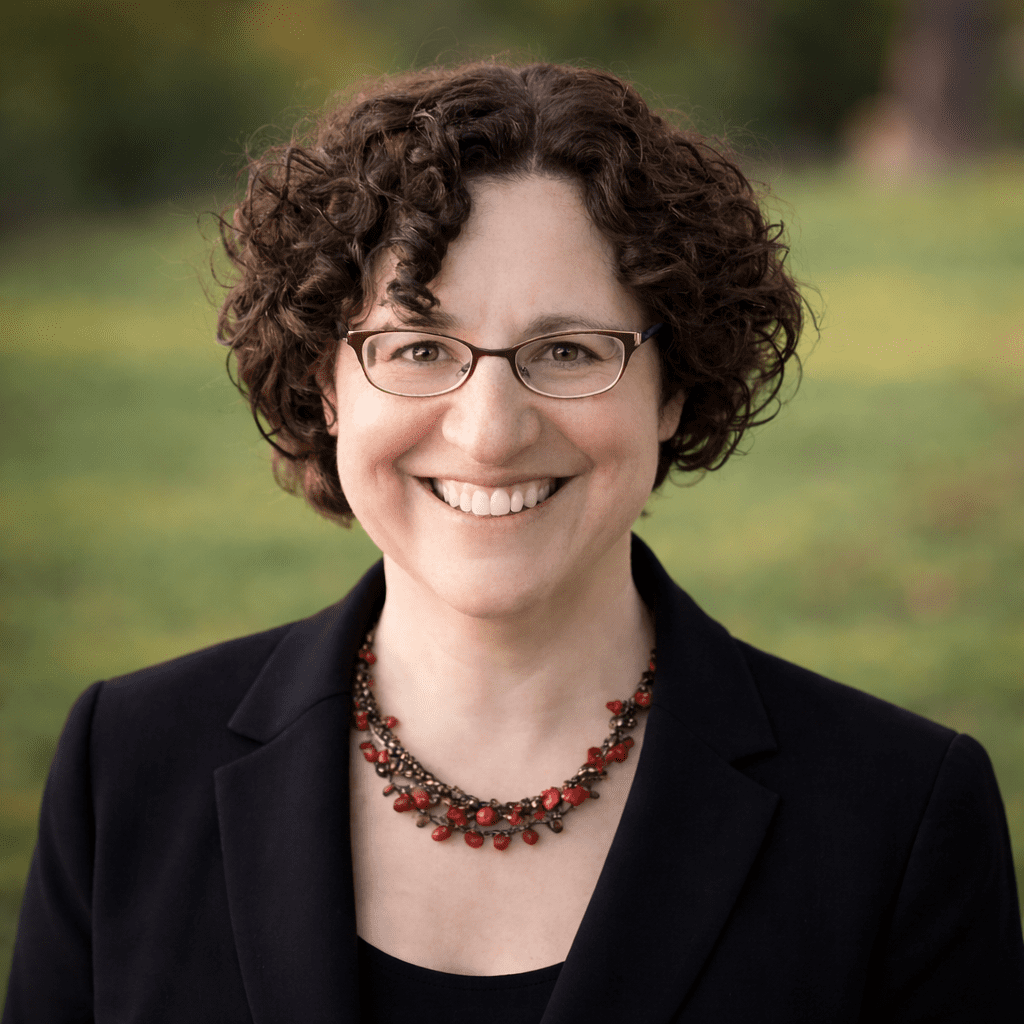
Dr. Julia Paley’s work brings together anthropology, human rights advocacy, and public scholarship to examine migration systems and democratic institutions in periods of political change.
Selected roles
Religious Action Center
Director of Immigration Justice
Congregation Action Network
Co-Founder
National Science Foundation
Principal Investigator
Institute for Policy Studies
Associate Editor, Foreign Policy in Focus
University of Michigan
Faculty
University of Pennsylvania
Faculty
School for Advanced Research
Convener, Advanced Seminar
La MaMa International Playwright Retreat
Artist
PROFESSIONAL EXPERIENCE
Migration Advocacy & Coalition Building
As Director of Immigration Justice at the Religious Action Center in Washington, DC, Dr. Paley led a national advocacy initiative addressing asylum policy, detention, and deportation. She built a network of clergy and congregational leaders across the United States and managed a $1 million grant program supporting immigration justice organizing in local communities. Her work connected faith communities, legal advocates, and national coalitions and included federal policy advocacy on Capitol Hill.
Dr. Paley co-founded the Congregation Action Network in Washington, DC, a multi-faith network that brought together more than seventy congregations across Maryland, Virginia, and the District of Columbia to prevent detention and deportation. Working with migrant organizations and legal advocates, the network supported individuals facing removal and organized community responses. Affiliated with Faith in Action, the organization received the “I’ll Be There” Award from DC Jobs with Justice.
Convening on Democracy
Dr. Paley organized the Advanced Seminar Toward an Anthropology of Democracy at the School for Advanced Research. Funded in part by the Wenner-Gren Foundation for Anthropological Research, the seminar brought together anthropologists conducting long-term ethnographic research in Africa, Asia, Latin America, and North America to examine how concepts such as freedom, citizenship, sovereignty, and the rule of law are interpreted and practiced in different cultural and political contexts.
The seminar resulted in the edited volume Democracy: Anthropological Approaches, which examines how competing definitions of democracy gain authority and how claims to represent “the will of the people” are constructed and contested in practice.
Intellectual Contributions
Dr. Paley is the author of Marketing Democracy: Power and Social Movements in Post-Dictatorship Chile, which received the American Ethnological Society’s Sharon Stephens Prize for a first book addressing major contemporary social issues. Based on long-term ethnographic research in Chile, the book examines how democratic politics was reshaped through struggles among social movements, political institutions, and transnational economic pressures in the aftermath of dictatorship.
She also authored an Annual Review of Anthropology article that brought together ethnographic research from multiple regions to help define an emerging anthropology of democracy.
Dr. Paley served as Principal Investigator on a National Science Foundation–funded project examining participatory democracy and development programs in Ecuador and was a Fulbright Visiting Scholar at Universidad Andina Simón Bolívar in Quito.
She previously held faculty positions in anthropology at the University of Michigan and the University of Pennsylvania, where she received the Michael B. Katz Award for Excellence in Teaching.
Current Project
Pending (In Development)
Pending is a full-length performance work examining detention, deportation, and the erosion of due process in the contemporary United States. The project takes as its point of departure the deportation of Venezuelan migrants to CECOT, El Salvador’s mega-prison, situating that episode within broader questions of executive power, legal interpretation, and the administrative conversion of suspicion into confinement.
Composed as a theatrical score integrating movement, sound, projection, and spatial design, the work traces how bureaucratic interpretation moves through bodies—how visible markers such as tattoos are extracted and misread, how those readings become official designation, and how designation becomes removal and incarceration.
Drawing on investigative journalism, human rights reporting, and government documentation, the project translates institutional language and classification systems into embodied experience.
Pending is currently in development and will be workshopped at the La MaMa Umbria International Playwright Retreat, with additional development planned in collaboration with artists and researchers.
Books
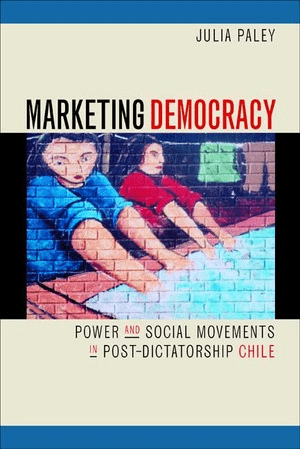
Marketing Democracy: Power and Social Movements in Post-Dictatorship Chile
(American Ethnological Society Book Prize)
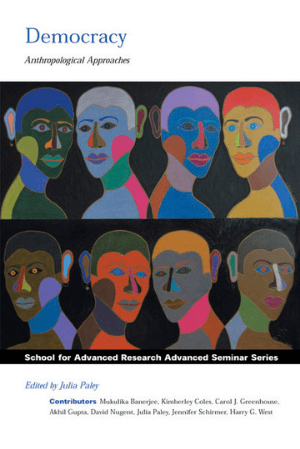
Democracy: Anthropological Approaches
(SAR Press)
Profile
Dr. Julia Paley is a cultural anthropologist whose career spans academic research, nonprofit leadership, and collaboration with civil society organizations across the Americas.
Her work draws on long-term ethnographic research in Chile and Ecuador and extensive engagement with immigration advocacy networks in the United States.
She previously served on the anthropology faculties of the University of Michigan and the University of Pennsylvania.
Dr. Paley holds a PhD and MA in Anthropology from Harvard University and a BA in Urban Studies from the University of Pennsylvania.

Dr. Julia Paley is a cultural anthropologist whose career spans academic research, nonprofit leadership, and collaboration with civil society organizations across the Americas.
Her work draws on long-term ethnographic research in Chile and Ecuador and extensive engagement with immigration advocacy networks in the United States.
She previously served on the anthropology faculties of the University of Michigan and the University of Pennsylvania.
Dr. Paley holds a PhD and MA in Anthropology from Harvard University and a BA in Urban Studies from the University of Pennsylvania.
Areas of Expertise
Strategic Advising
Assessing complex policy environments, clarifying institutional priorities, and identifying strategic paths forward.
Coalition Building
Bringing congregations, advocacy organizations, and civic groups together to coordinate collective responses to immigration policy and democratic challenges.
Seminars & Convenings
Designing and facilitating seminars and retreats that bring scholars and practitioners into sustained conversation about contested political questions.
Writing & Speaking
Publishing essays and delivering public talks on migration, democratic politics, and the interpretation of rights.
Collaborations
Dr. Paley undertakes a limited number of advisory arrangements with advocacy organizations and philanthropic institutions working on migration and democratic governance.
These engagements typically involve multi-month partnerships focused on strategic direction, coalition coordination, and policy analysis.